Water Damage Cleanup and Drying in Sandston
When a pipe bursts, the basement floods or a water heater lets go, we pull the water out, dry your home all the way down and fix what got hurt. We work across Sandston, Highland Springs and Mechanicsville, and we try to save the floors, walls and framing you already have.
- 24/7 emergency response
- Free on-site inspection
- Drying checked with meters
- Insurance process explained
Our Water Damage Services
The first step is usually water extraction, then drying and dehumidifying until the wood and drywall test dry. When water has been sitting long enough to grow mold, mold remediation comes next. We also take on flood cleanup and sewage cleanup, along with the repairs and rebuild that bring a room back to how it was.
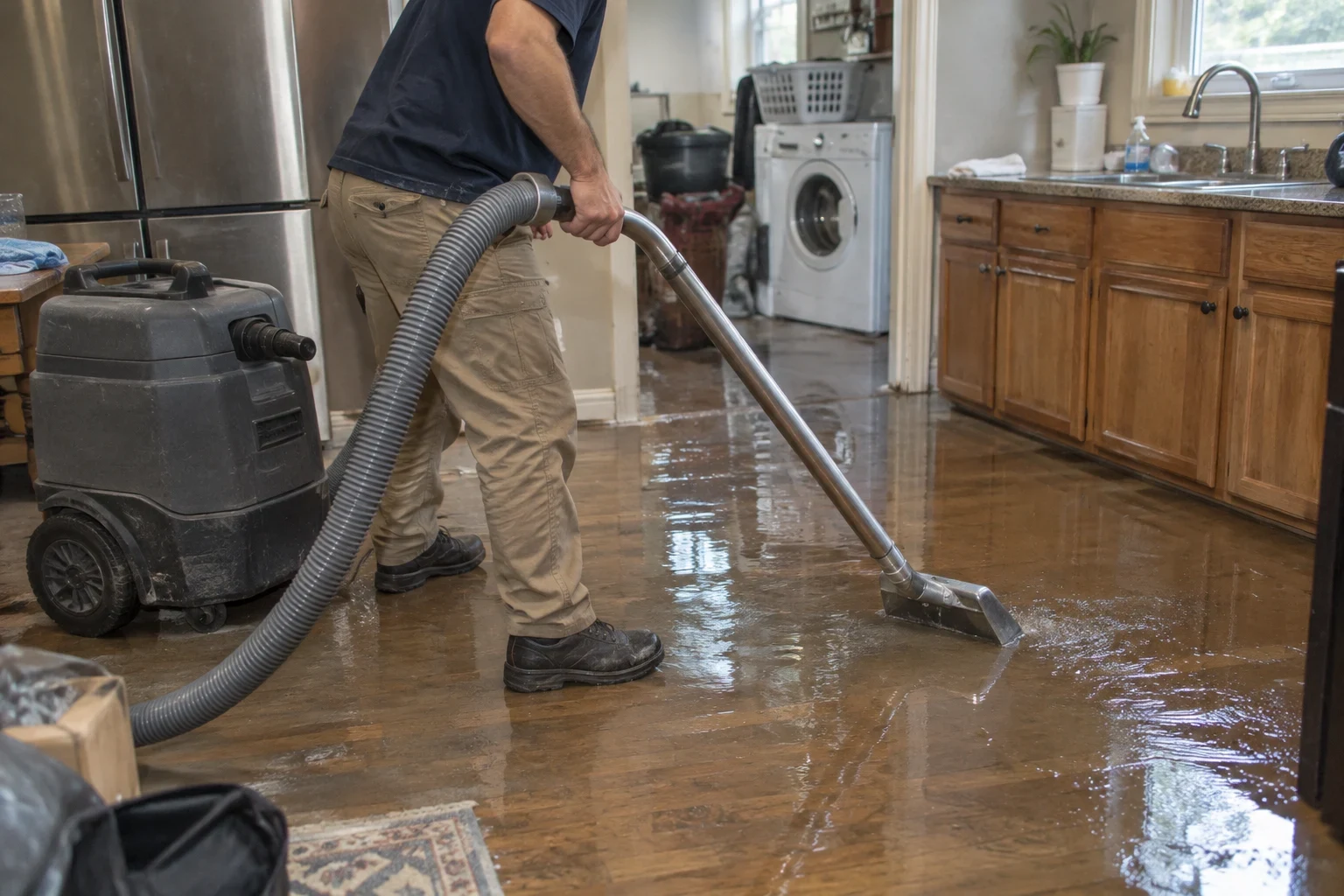
Water Extraction
We pump and extract standing and soaked-in water from carpet, hard floors, basements and crawlspaces so more of your home can be dried and kept.
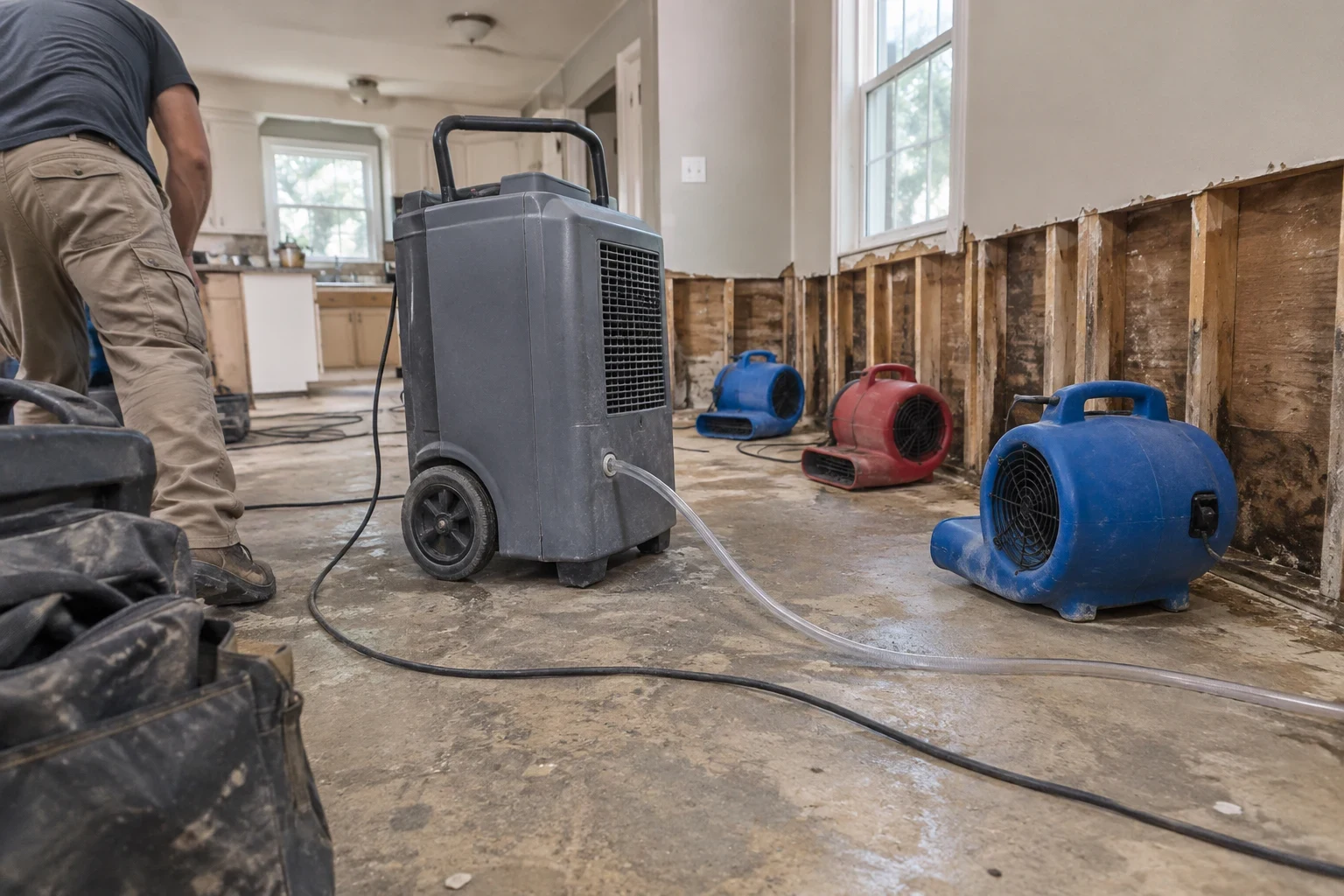
Drying and Dehumidifying
We dry the hidden parts of your home, like subfloor, wall cavities and framing, and we prove it with daily moisture readings before any equipment leaves.
Mold Remediation
We remove mold, clean the framing worth keeping and fix the moisture behind it so the growth stops coming back.
Flood Cleanup
After rising water gets in, we pump it out, clear mud and debris, and dry the structure so floors, framing and walls last for years.
Repairs and Rebuild
Once your home is dry, we replace the wet drywall, flooring, cabinets and trim, and keep the parts that are still sound.
Sewage Cleanup
Sewage backup in a basement, bathroom or crawlspace removed, disinfected and dried so the framing and floors underneath stay sound for years.
How a Water Job Runs
Here is what happens from the moment you reach us. You will know what we are doing and why at each step.
- 1
You call, we answer
Tell us what happened and where the water is. If you can, shut off the main water valve and stay clear of wet outlets and cords until we get there.
- 2
Inspect and stop the source
We find where the water came from and make sure it is stopped. Then we check walls, floors and ceilings with a moisture meter so we know the full spread, not just the puddle you can see.
- 3
Pull the water out
We use truck or portable extractors to remove standing water from floors, carpet and pad. Getting the bulk out fast cuts drying time by days.
- 4
Dry and check daily
We set air movers and dehumidifiers, then come back to take readings and adjust. Equipment stays until the framing and drywall test dry.
- 5
Repair what was lost
Once things are dry, our repairs and rebuild work replaces drywall, flooring and trim that could not be saved, so the room looks and works like it did before.
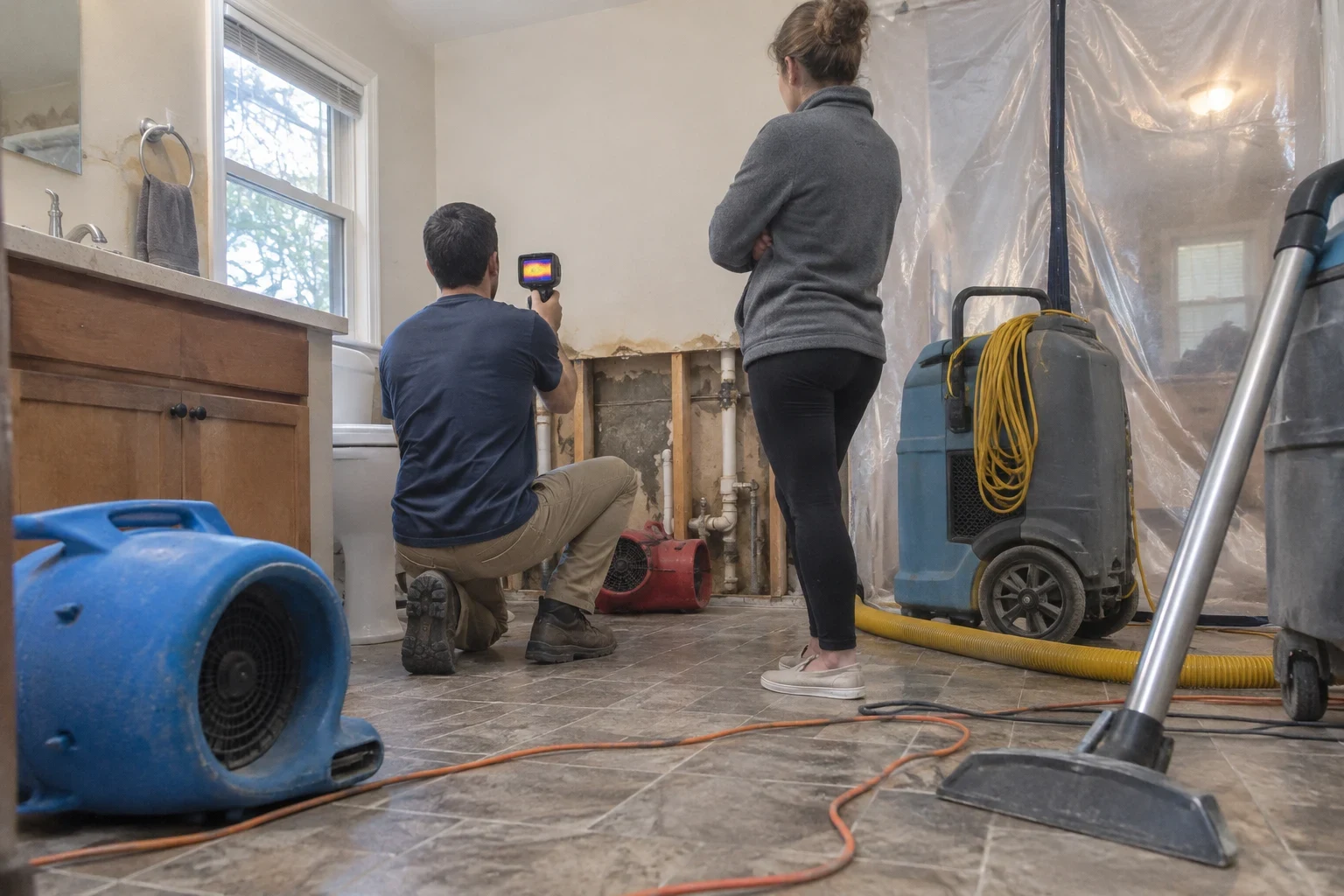
A Local Crew That Cleans Up Water
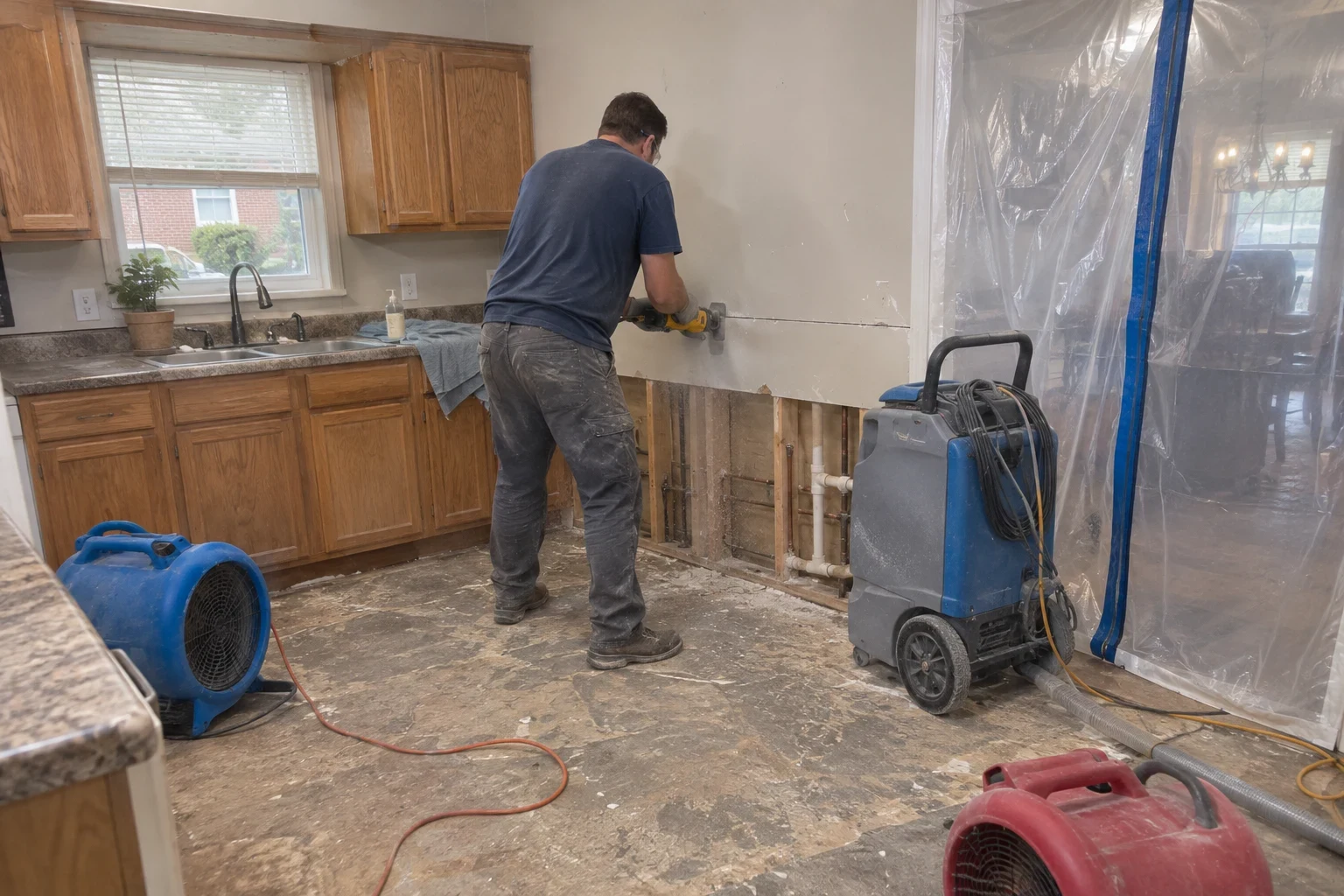
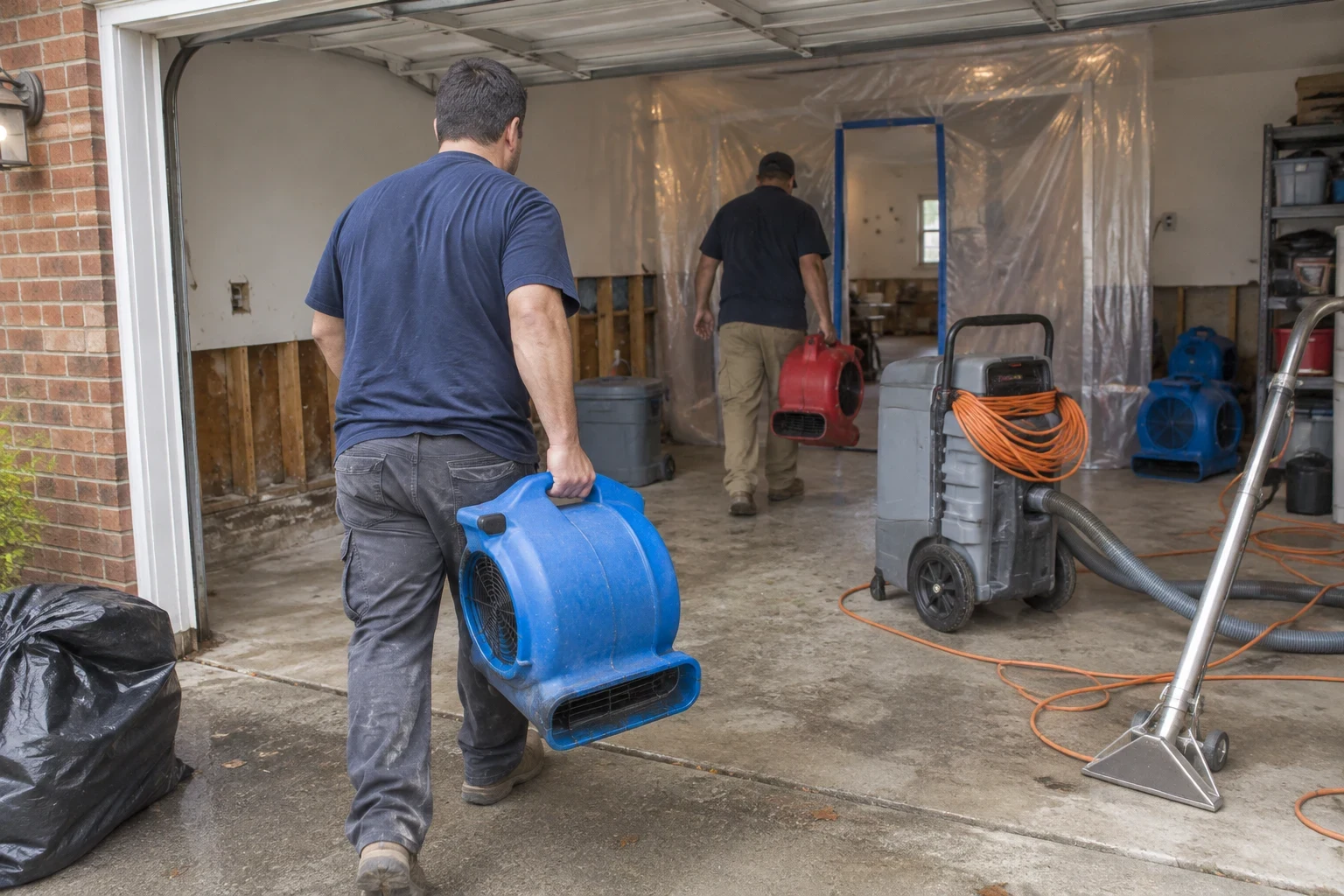
We are a water damage restoration company based in Sandston. We do the dirty part of the job: pulling water off floors, cutting out ruined drywall, and running fans in your basement at two in the morning. We also do the careful part, which is reading the moisture in your walls and floors until they are truly dry.
Our view is simple. Your home already has good bones, and most of it can be saved if the water is handled right and handled fast. We would rather dry a hardwood floor than rip it out, and we would rather tell you the real cause of a leak than leave you guessing. That kind of work keeps your home sound for years after we pack up the fans.
Towns We Cover
Our crew is based in Sandston and works the communities around it. We regularly head to Highland Springs, Montrose, East Highland Park, Laurel and Lakeside. We also go out to Richmond, Mechanicsville, Bensley, Chester and Meadowbrook.
- Sandston
- Highland Springs
- Montrose
- Richmond
- Mechanicsville
- East Highland Park
- Bensley
- Chester
- Meadowbrook
- Laurel
- Lakeside
Live just outside these towns? Give us a call and we will give you a plain yes or no on whether we can reach you.
How We Work in Your Home
Water damage gets worse by the hour, and a rushed job tends to come back as warped floors or a musty smell months later. We work to fix it once and leave your home in shape to last.
We save before we tear out
Wet drywall and hardwood are not always lost. If moisture readings show a wall or floor can dry in place, we dry it in place. We only cut out what is past saving, and we show you the readings so you can see why.
We dry to a number, not a date
We check moisture in the framing, subfloor and drywall every visit and write the readings down. The fans and dehumidifiers stay until the materials are back to normal, not until a set number of days runs out.
We answer around the clock
Water does not wait for business hours, so neither do we. On site in 60 mins or less is how we run our emergency calls.
Photos and notes for your claim
We work with most major insurance companies. We photograph the damage, log the moisture readings and write up what we did. Your adjuster decides coverage, but you will have clear records to hand over.
We point out the cause
A water job is a good time to find the weak spot. If it was a cracked supply line, a tired water heater or a downspout dumping against the foundation, we tell you plainly so it does not happen again.
What Sets the Price of a Water Job
Every water job is priced on its own. It depends on how much of your home got wet, what kind of water it was and how much has to be rebuilt once things are dry. These are the things we check during the walk-through.
We do the on-site inspection for free. Once we have looked, you get a written, line-item estimate before we go any further than stopping the immediate damage.
- How far the water spread
- A single wet bathroom floor takes less work than water that crept under walls and reached several rooms. Water moves under baseboards and into wall cavities where you cannot see it, so we trace it with a meter before we put a number on anything.
- Clean, gray or sewage water
- A broken supply line starts out as clean water. Overflow from a washer or dishwasher counts as gray water. A sewage backup calls for protective gear, disinfecting and pulling out more porous material, so it costs more.
- How long it sat
- If we catch it within the first day or two, a lot can dry where it is. Wait longer and materials swell, carpet pad falls apart and mold can take hold. That means more tear-out and more labor.
- What the room is made of
- Carpet and pad, hardwood, laminate, drywall and older plaster each react to water in their own way. Hardwood can cup and needs slow, careful drying. Once water gets under laminate, it usually has to be replaced.
- Access to the wet areas
- Finished basements and cramped crawlspaces eat up more time and more equipment than an open room does. Sometimes we have to open a ceiling or wall so air can reach the wet framing.
- Repairs after drying
- On some jobs the work is done when the readings say dry. On others you need new drywall, paint, flooring or trim. We list that work on its own so you can see what it covers.
Questions We Hear Most
- How fast can you get to my house?
- We take emergency calls 24/7, day or night. On site in 60 mins or less is the standard we hold our emergency calls to. Until we get there, shut off the water if you can and keep away from outlets and cords near the wet area.
- Will my homeowners insurance pay for this?
- Two things decide that: the wording of your policy and where the water came from. Something sudden, like a pipe that splits, is often covered. A leak that dripped for months, or water that came in from outside, often is not. We work with most major insurance companies, and we give you photos, moisture readings and a written scope to send in. The adjuster makes the final call on coverage.
- How long does drying usually take?
- A typical room dries in roughly three to five days. How long yours takes depends on how much water came in, what it soaked and how long it sat. Hardwood and plaster often need more time. We take readings at each visit and only pull equipment once the materials test dry.
- Do I need to move out while you work?
- Most of the time, no. Plenty of families stay home while the fans and dehumidifiers run, though the house will be loud and warm. A sewage job or work on your only bathroom can change that, and if we think you should stay somewhere else for a few days, we will tell you straight.
- Can my floors and carpet be saved?
- Often they can, if we get there early and the water was clean. Carpet can sometimes dry where it lies, but soaked pad almost always comes out. Hardwood can usually be dried with the right equipment. Laminate, and anything sewage touched, generally has to be replaced.
- When should I worry about mold?
- Mold can start growing on wet drywall, wood and carpet pad within a day or two, and humid Virginia summers speed it up. That is the main reason fast drying matters. If you notice a musty smell or spots on a wall, our mold remediation work removes the growth and dries the area so it does not come back.
- Is the inspection really free?
- Yes. We come out, find the source, measure how far the water traveled and show you what we found. You get a written estimate before we do anything beyond stopping the immediate damage.
Get the Water Out Before It Spreads
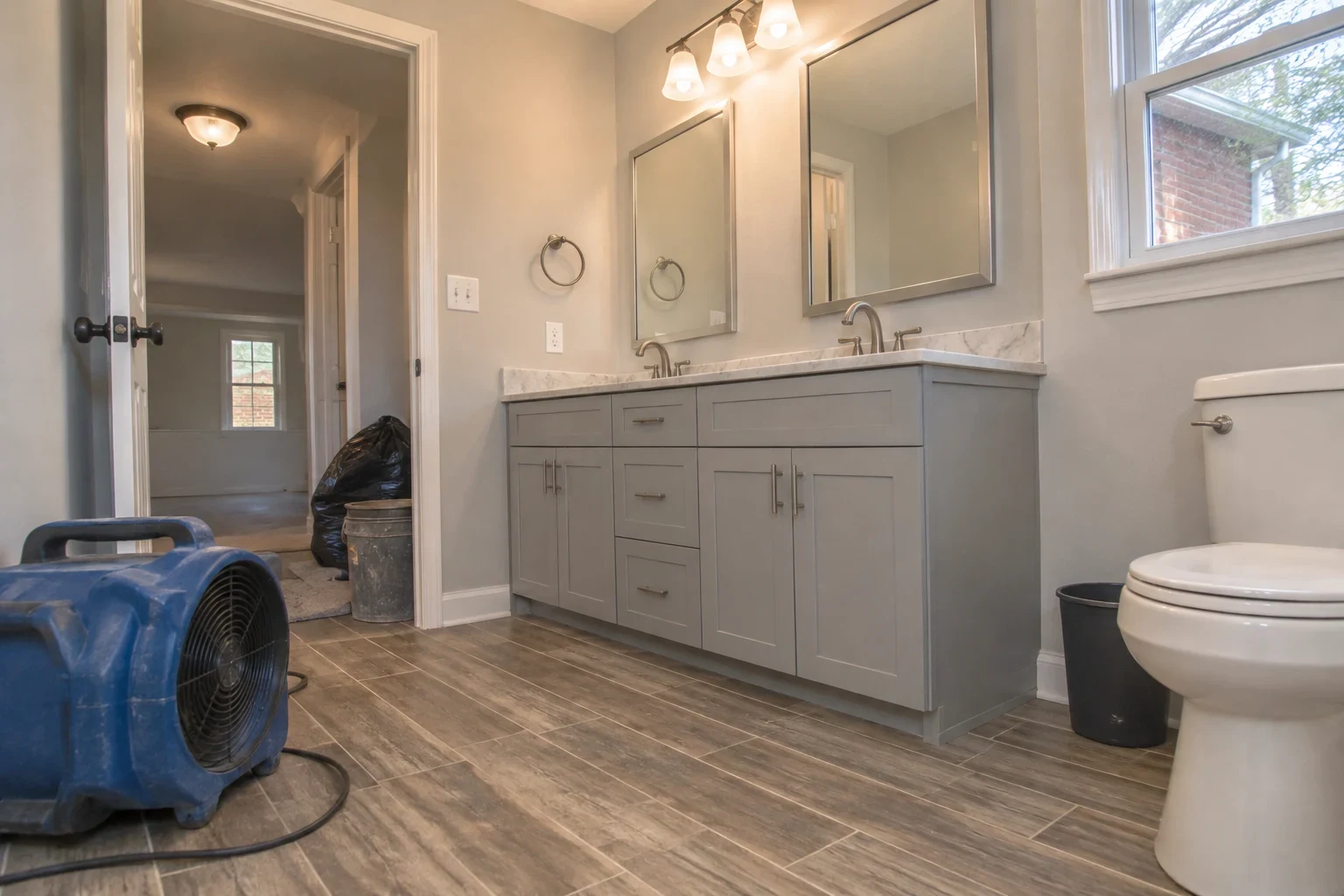
The sooner wet floors and walls start drying, the more of your home we can save. We answer day and night and can set up a free on-site inspection.