ServicesDrying and Dehumidifying
Drying and Dehumidifying in Sandston, VA
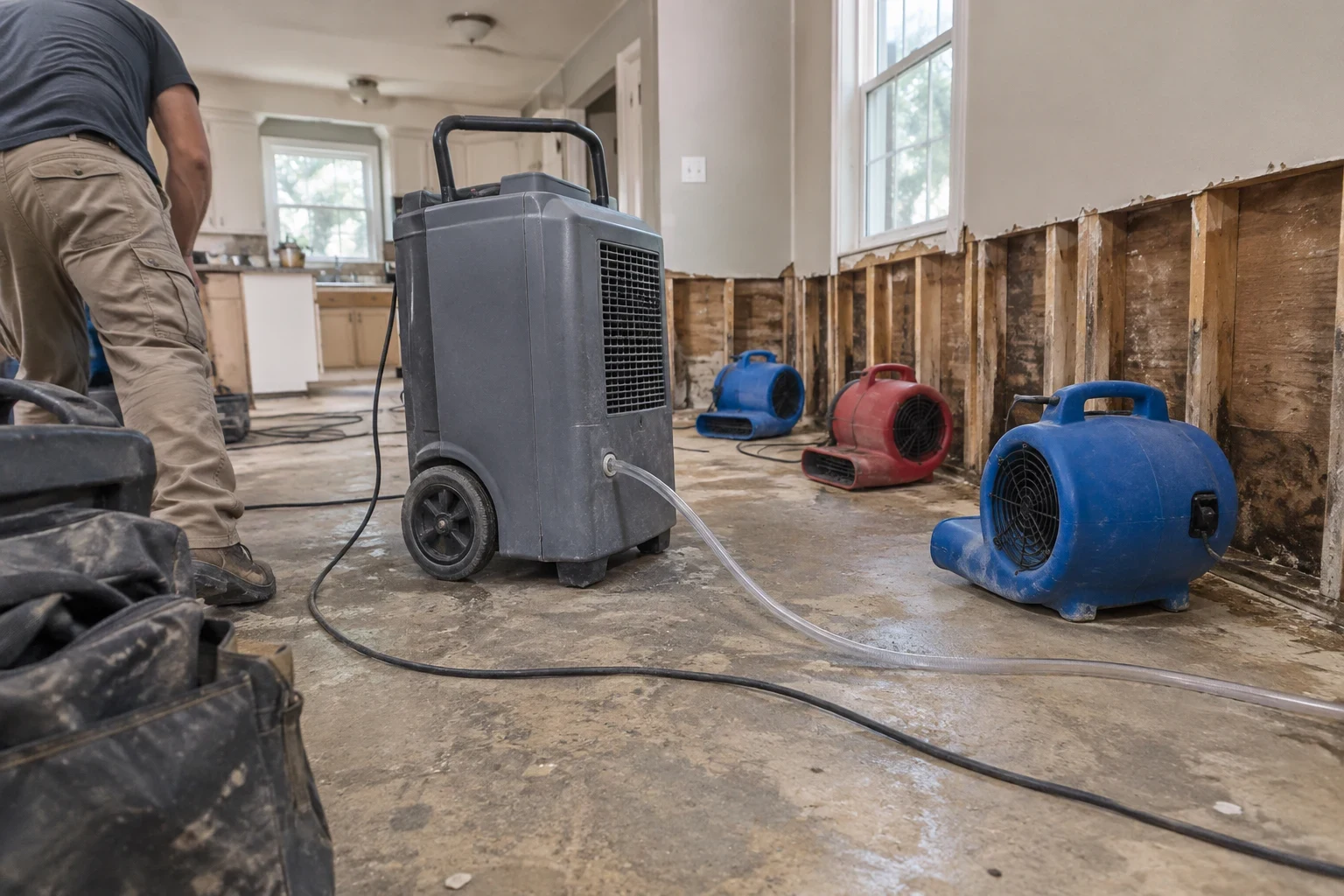
Getting the standing water up is only half the job. We set dehumidifiers and air movers, measure the moisture in your floors and walls each day, and remove the equipment only after the numbers show the materials are dry. That keeps the drywall, subfloor and cabinets you already have.
Water hides where you can't feel it
The top of a carpet can seem fine by the next morning. Below it, the pad, the plywood and the bottom plate of the wall may hold water for weeks unless someone dries them on purpose. That leftover moisture is what makes hardwood warp, drywall turn soft, tile let go and mold show up months later.
Our goal with drying and dehumidifying is to keep the parts of your home you already paid for. Subfloor, drywall, trim and cabinets that get dried the right way usually stay in place. Leave them damp and they get torn out. A few extra days of drying costs less than weeks of rebuilding.
Most of the time we start drying right after water extraction. When a supply line bursts, a water heater fails or a slow leak runs for days, this step decides how much of your home stays and how much has to be replaced.
What you get with our drying service
Finding every wet spot
Moisture meters and a thermal camera show us where the water traveled, even behind walls and under flooring. We mark those areas, and that layout tells us where each machine belongs.
Air movers paired with dehumidifiers
Air movers blow across damp surfaces so the water turns to vapor. Dehumidifiers pull that vapor from the air and send it out through a drain hose. Run only one and the water just shifts from the floor to the air and back.
Getting air into walls and cabinets
For water stuck in a wall cavity or under a cabinet, we might drill a few small holes or remove the toe kick so dry air can get in. That does far less harm than tearing out full sheets of drywall.
Careful hardwood drying
Wood that has cupped can often lie flat again if it dries slowly and evenly. We use floor drying mats when they fit the job and keep an eye on the numbers so the boards do not crack from drying too fast.
A daily log you can keep
Every day we return to read the meters and adjust the setup. You get a written record of each reading, which is useful if you file an insurance claim.
Signs your home still needs drying
A musty smell that hangs on
If a room smells damp days after a leak, there is still water somewhere. Usually it is under the floor or behind the baseboard.
Floors cupping or buckling
Wood boards with raised edges are soaking up water from below. Vinyl that lifts or bubbles is trapping it underneath.
Soft or stained drywall
Drywall that gives when you press it, or shows a tide line, is holding water. Paint that bubbles or peels is another sign.
Windows sweating indoors
Fog on the inside of the glass and a sticky feel to the air mean the humidity is too high. In a humid central Virginia summer, an open window will not fix that on its own.
You ran fans and it still feels damp
Box fans move air but do not remove water from it. If the room stayed damp after a few days of fans, the moisture has nowhere to go.
How a drying job runs
- 1
We show up and check
We are on site in 60 mins or less. First we make sure the water source is stopped and any standing water is removed. Then we map the moisture room by room.
- 2
We set the equipment
We place air movers and dehumidifiers based on the map, not a guess. If needed we close off the wet area with plastic so the system works faster and the rest of your home stays comfortable.
- 3
We check in every day
Each visit we take readings, move equipment where it is needed and empty or check drain lines. We tell you what changed and what is left.
- 4
We confirm it is dry
We compare readings against dry materials elsewhere in your home. When they match, the equipment goes. If anything could not be saved, we walk you through repairs and rebuild before we leave.
What moves the price of a drying job
The cost comes down to how much material got wet, what kind of material it is and how many days it takes to let go of the water. Once we inspect, we hand you a written estimate that spells out each line. If you plan to file a claim, it helps to know we work with most major insurance companies. We will explain the usual order of a claim and share our moisture logs, while your adjuster makes the call on what is covered.
- How much floor and wall got wet
- One soaked bathroom floor might take two or three machines. A few rooms or a finished basement means more equipment on site and more days of readings.
- What the wet material is
- Carpet and drywall release water fairly quickly. Plaster, hardwood and thick subfloor hang on to it, so they take longer and get closer checks.
- How long the water sat
- A leak caught within the hour mostly stays on the surface. Water that ran for days wicks up into walls and soaks the framing, which adds drying days.
- Tight or hidden spaces
- Wall cavities, the space under cabinets and crawlspaces need extra access work and special equipment before they will dry.
Drying and dehumidifying questions
Something not covered here? (804) 531-5797
How many days will the drying take?
Plan on several days for most homes. The number depends on what got wet and for how long. We do not set a finish date up front and walk away. The daily readings tell us when the materials are dry, and that is when the equipment comes out.
Will a couple of box fans and a dehumidifier from the hardware store do the job?
They can handle a little water on tile or vinyl. Once water reaches the carpet pad, drywall or subfloor, home units are too slow to keep up. Mold can take hold within a couple of days, so the pace of drying really counts.
Do my walls have to be cut open?
Usually not. We can often get air into a wall through a few small holes down low that patch easily. We take out drywall only when it is ruined or the water was contaminated, and we show you the reason before we cut.
Is it possible to save hardwood that has started to cup?
Many times, yes, as long as drying starts early. Mild cupping tends to flatten as the boards dry evenly. If boards have cracked or pulled loose, they may need to be replaced, and we will be honest with you about that.
Can my family keep living at home while the equipment runs?
Most do. Expect a steady hum and a warmer room while the machines work. We route cords and hoses away from where you walk and seal off the work area when that is possible.
Get the hidden water out before it does damage
If you have had a leak or a flood, call us and we will come look. The inspection is free, and we will tell you what is wet and what it takes to dry it right.