ServicesFlood Cleanup
Flood Cleanup in Sandston
When storm water or a rising creek gets into your home, we pump it out, haul away the mud and ruined materials, clean what stays, and dry the structure. The goal is simple. Keep as much of your house as we can, and make it last.
What Flood Cleanup Covers
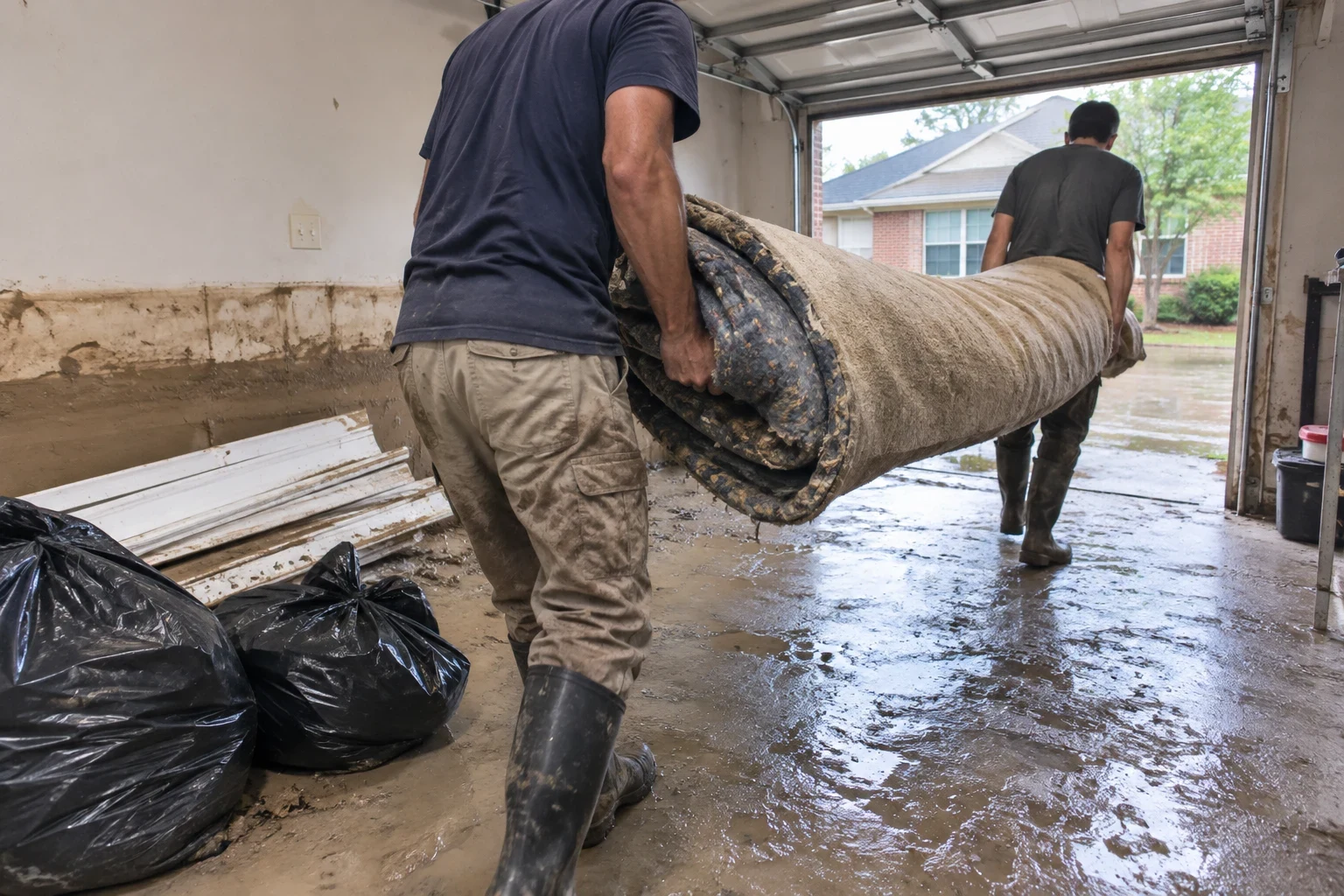
Flood water is different from a burst pipe. It comes from outside, so it carries mud, yard runoff and whatever it picked up on the way in. That means cleanup is more than drying. Carpet, pad and wet drywall usually have to come out, and every surface the water touched needs washing and disinfecting.
Our focus is on what can be saved. Hardwood, plaster, cabinets and framing often come through fine if they are cleaned and dried the right way, and fast. Pull too much and you pay to rebuild things that were sound. Pull too little and you get warped floors and mold a year from now.
Heavy summer storms and the remnants of tropical systems are what usually push water into homes around here, often through a basement, a crawl space or a low door. We handle those jobs start to finish, and we can bring in drying and dehumidifying, mold remediation or repairs and rebuild as the job needs them.
What the Work Includes
- Pumping and extraction
- We remove standing water first with pumps and truck-mounted or portable extractors. Getting the bulk out early cuts drying time by days.
- Mud and debris removal
- Silt settles in corners, behind baseboards and in crawl spaces. We shovel, scrape and flush it out so it does not keep feeding moisture and odor.
- Careful tear-out
- We cut wet drywall above the water line and pull soaked carpet pad and insulation. We mark and photograph what we remove so you and your insurance company can see why.
- Cleaning and disinfecting
- Floors, framing, wall cavities and hard furniture get washed and treated. Flood water is dirty, so this step is not optional.
- Structural drying
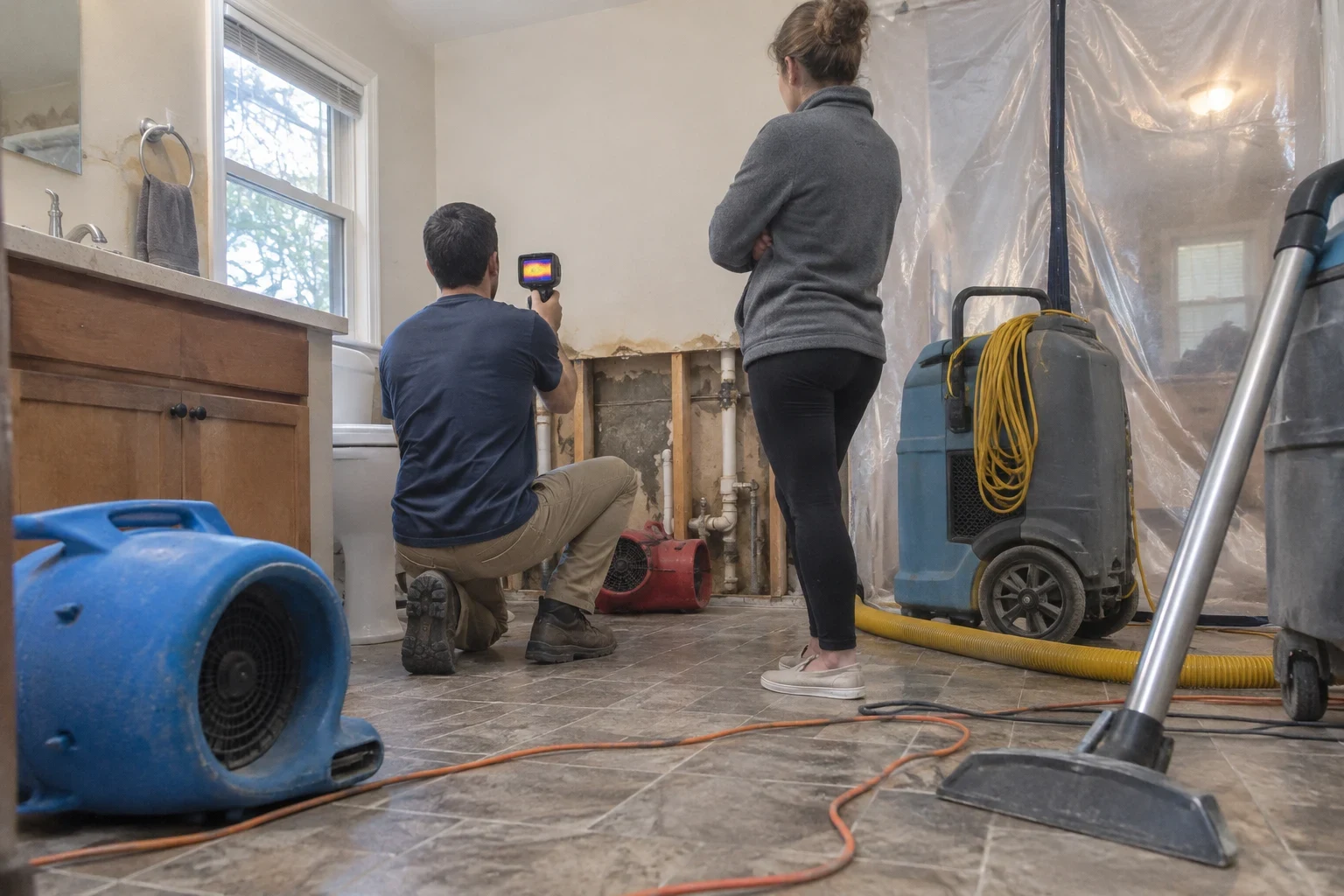
- Air movers and dehumidifiers run until moisture readings in wood and walls are back to normal. We check them daily rather than guessing.
- Contents help
- We move furniture and belongings out of the wet area and help sort what can be cleaned from what should go.
Signs You Need Flood Cleanup
Water came in from outside
If rain, runoff or a creek put water in your basement, crawl space or living area, treat it as dirty water. It needs cleaning, not just drying.
A line of mud on the walls
A brown tide mark tells you how high the water got. Anything below it has soaked up dirty water, including the drywall and insulation behind it.
Musty smell that will not quit
A damp, earthy smell a few days after a storm means something is still wet. Usually it is the subfloor, the crawl space or the bottom of the walls.
Floors cupping or soft spots
Hardwood that is curling at the edges or a floor that feels spongy is taking on water from below. Catching it now gives the wood its best chance.
Water in the crawl space
Standing water under the house soaks joists, sill plates and ductwork. It can sit there unseen for weeks if no one checks.
What Moves the Cost
No two floods leave the same mess, so we price the job after we see it. Before any major work begins, we go over the estimate with you one line at a time. We work with most major insurance companies. We can also tell you what a flood claim usually looks like from start to finish, but your adjuster decides what is covered.
How much area got wet
One basement room costs less than a full floor. Square footage drives labor, equipment and drying time.
How high the water rose
Water at two inches may only need baseboards and carpet pulled. Water at two feet means more drywall, insulation and cabinet work.
How long it sat
The longer water stays, the deeper it soaks in and the more likely mold has started. Early cleanup almost always means a smaller bill.
Access and contents
Tight crawl spaces, finished basements and rooms full of furniture take more time to work in and clear out.
How a Flood Cleanup Day Goes
- 1
Arrival and a first look
Our crew works to reach you on site in 60 mins or less. Safety comes first, so the power and wiring near the water get looked at before anyone wades in. Then we track down how the water got in and use moisture meters to map how far it traveled.
- 2
Water out, mud out
Pumps and extractors go to work first. Then we clear silt and debris and move your belongings to a dry spot.
- 3
Tear-out and cleaning
We pull out only the materials that cannot be saved, then wash and disinfect everything that stays. You get photos and notes on each item we removed.
- 4
Drying and daily checks
In most homes the equipment runs for several days. We stop by each day to take readings and shift fans and dehumidifiers to the spots still holding water.
- 5
Final readings and next steps
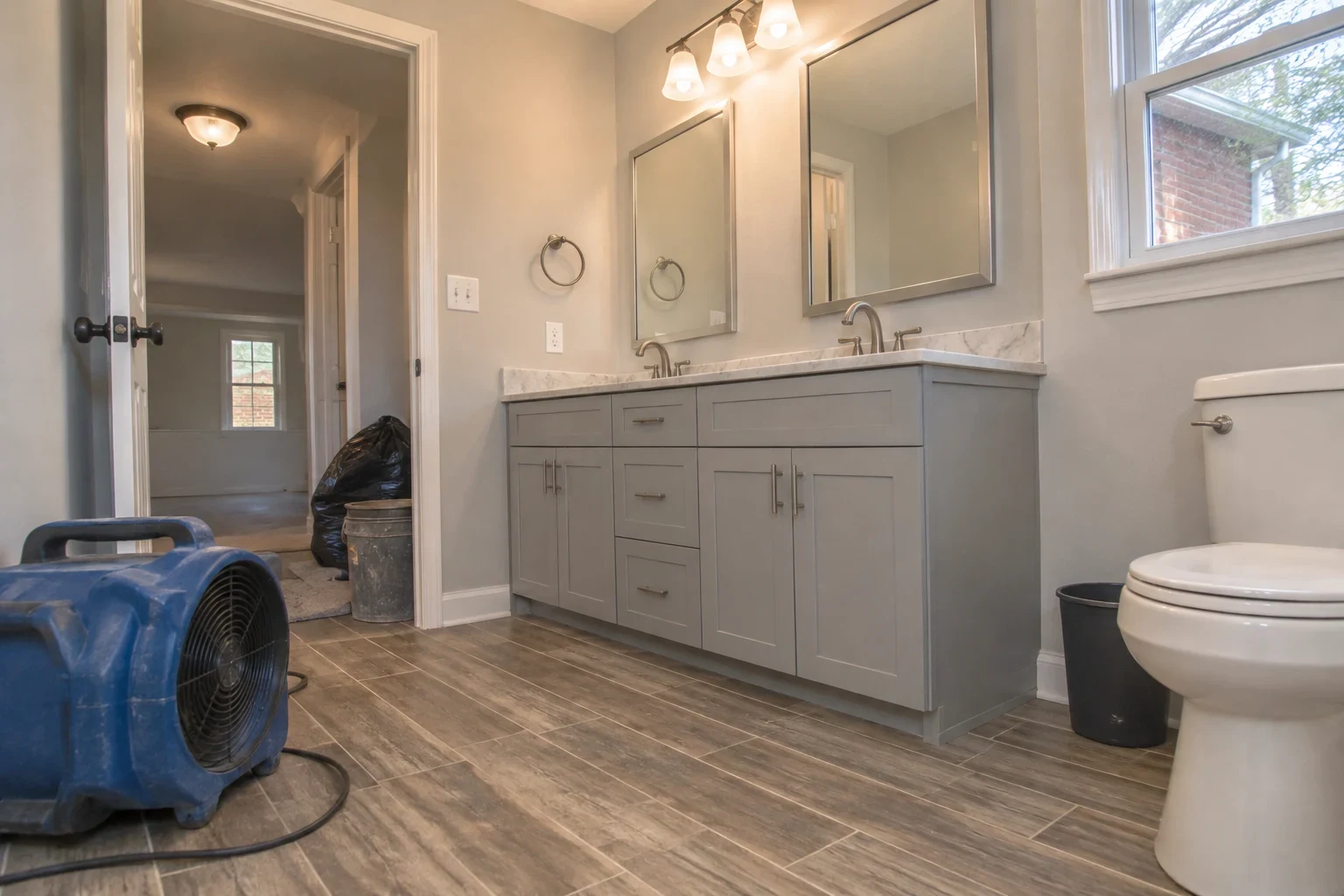
Once the structure reads dry, we pack up the equipment and go over what is left to do. If walls or floors need to go back in, our repairs and rebuild work picks up from there.
Flood Cleanup Questions
Can I just dry it out with fans myself?
For a small, clean spill, maybe. For flood water, no. It carries dirt and bacteria into walls and floors, so those areas need cleaning and often removal, plus drying that household fans cannot match. We can look and tell you honestly what you can handle.
Will my hardwood floors have to come out?
Not always. If we get the water out fast and dry the wood and subfloor slowly and evenly, many floors flatten back out. If boards have buckled or the subfloor is soaked through, we will show you the readings and explain why replacement makes more sense.
Does homeowners insurance cover flood damage?
Standard policies often treat outside flood water differently from a burst pipe, and many need separate flood coverage. Call your agent early. We document the damage with photos and moisture readings, which helps whichever way your coverage works.
How long until my house is back to normal?
Cleanup and drying usually take several days. Putting walls and flooring back adds more time, depending on how much came out. We give you a realistic timeline once we see the damage.
Do I need to leave my home during cleanup?
Usually not, unless the water reached living areas widely or sewage is involved. The equipment is loud and runs around the clock, so most people keep doors closed to the work area. We will tell you plainly if staying is not safe.
Water Got In. Let's Get It Out.
The sooner flood water comes out, the more of your floors, walls and framing we can keep. We serve Sandston, Highland Springs, Richmond and nearby towns, and we will start with a free on-site inspection.