ServicesRepairs and Rebuild
Water Damage Repairs and Rebuild in Sandston
Once your home is dry, the next job is putting it back together. We replace what the water ruined, keep what is still sound, and build it so it lasts. You get a written scope before work starts and a clean house when we leave.
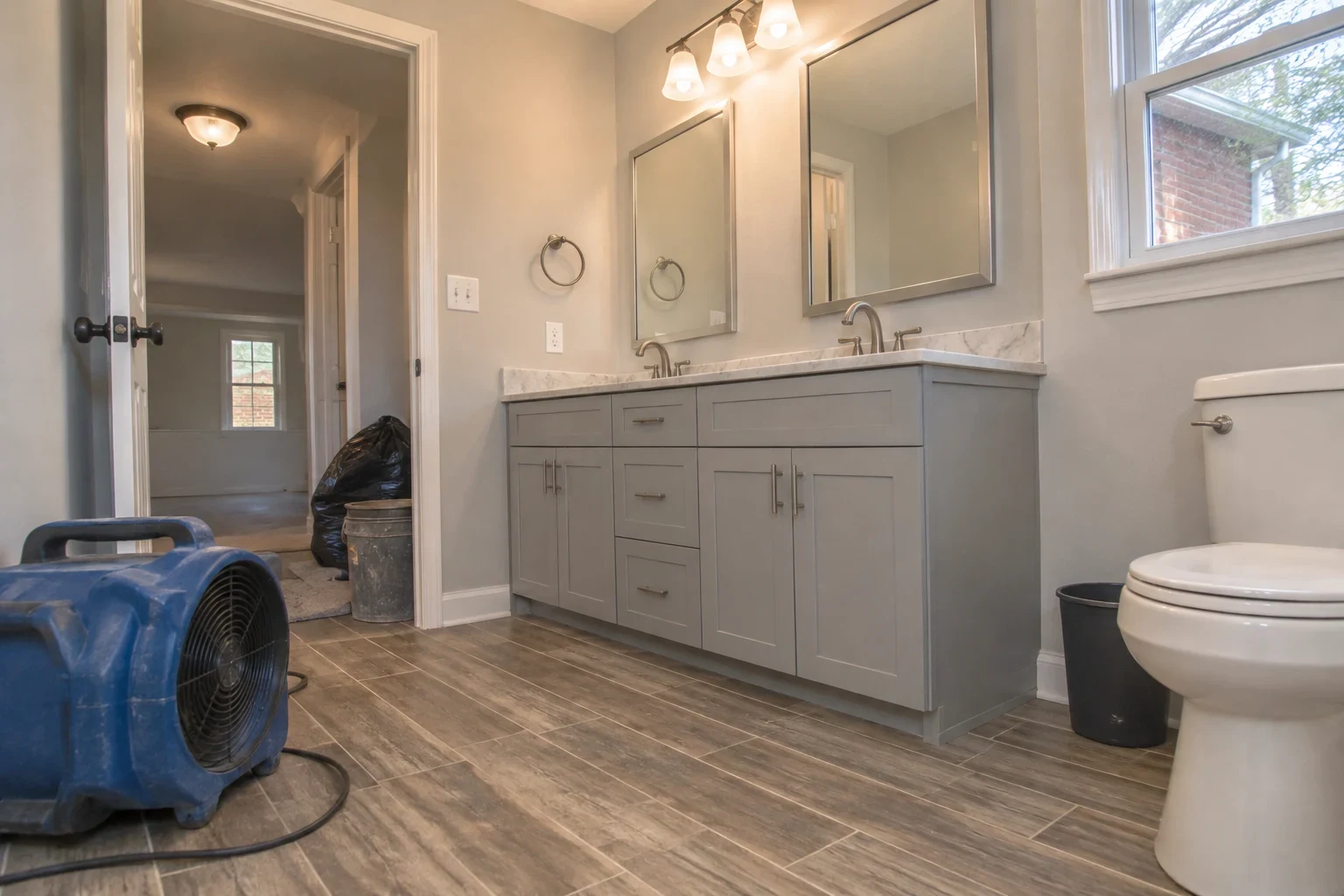
Putting your home back the way it was, or better
Repairs and rebuild is the last stage of a water job. The water is out, the drying and dehumidifying is done, and moisture readings are back to normal. Now the walls, floors and trim that came out need to go back in.
We look at every piece before it goes in the dumpster. A solid oak floor that only cupped a little can often dry flat and be sanded. A cabinet box made of particleboard that swelled at the base cannot. Keeping the good material saves you money and keeps your home looking like your home.
We also fix the small things that let water do damage in the first place. A missing caulk line or a supply hose that is starting to bulge gets pointed out, so the new work has a longer life.
What we put back
- Drywall and insulation
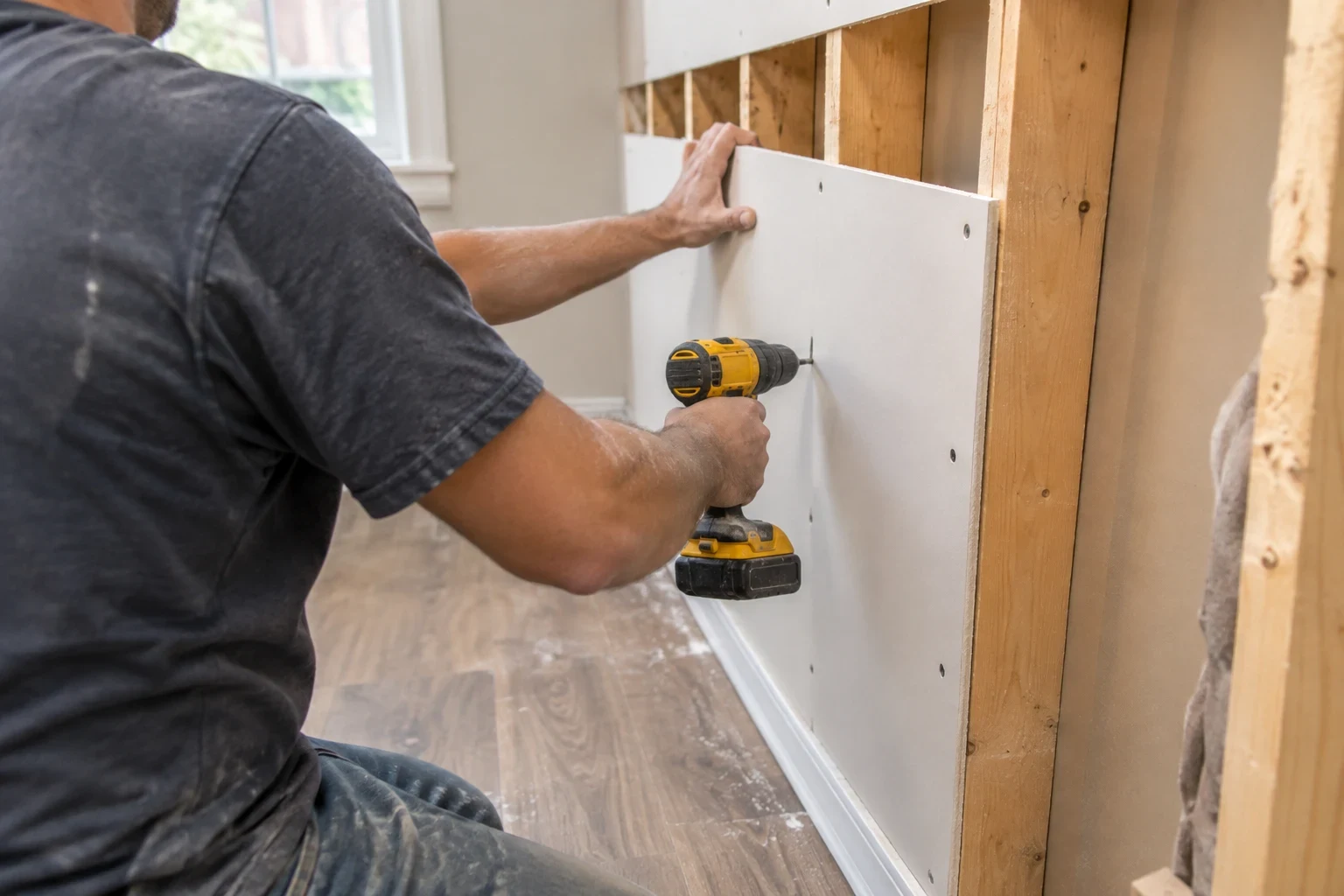
- The sections cut out during drying, often the bottom two or four feet of a wall, get fresh drywall. Insulation that got wet is always swapped out, never left to dry in the wall. We finish with tape, mud, sanding and primer.
- Flooring and subfloor
- Before a new floor goes in, we walk the subfloor and test for soft spots. Carpet pad that soaked through and laminate that swelled come out. Hardwood that dried back flat may just need a sand and refinish.
- Cabinets and vanities
- A kitchen or bathroom leak hits the base cabinets hardest. Boxes that can be saved get repaired, swollen ones get replaced, and then the counters and sinks go back in place.
- Trim, doors and paint
- New baseboards, door casings and any door slabs that swelled go in and get painted. We roll the whole wall from corner to corner so no patch stands out.
- Permits when the job needs one
- Changes to framing or moving electrical can call for a county permit and inspection. We take care of pulling it and setting up the inspection, so that task is off your list.
Signs it is time for repairs and rebuild
Walls are open from drying
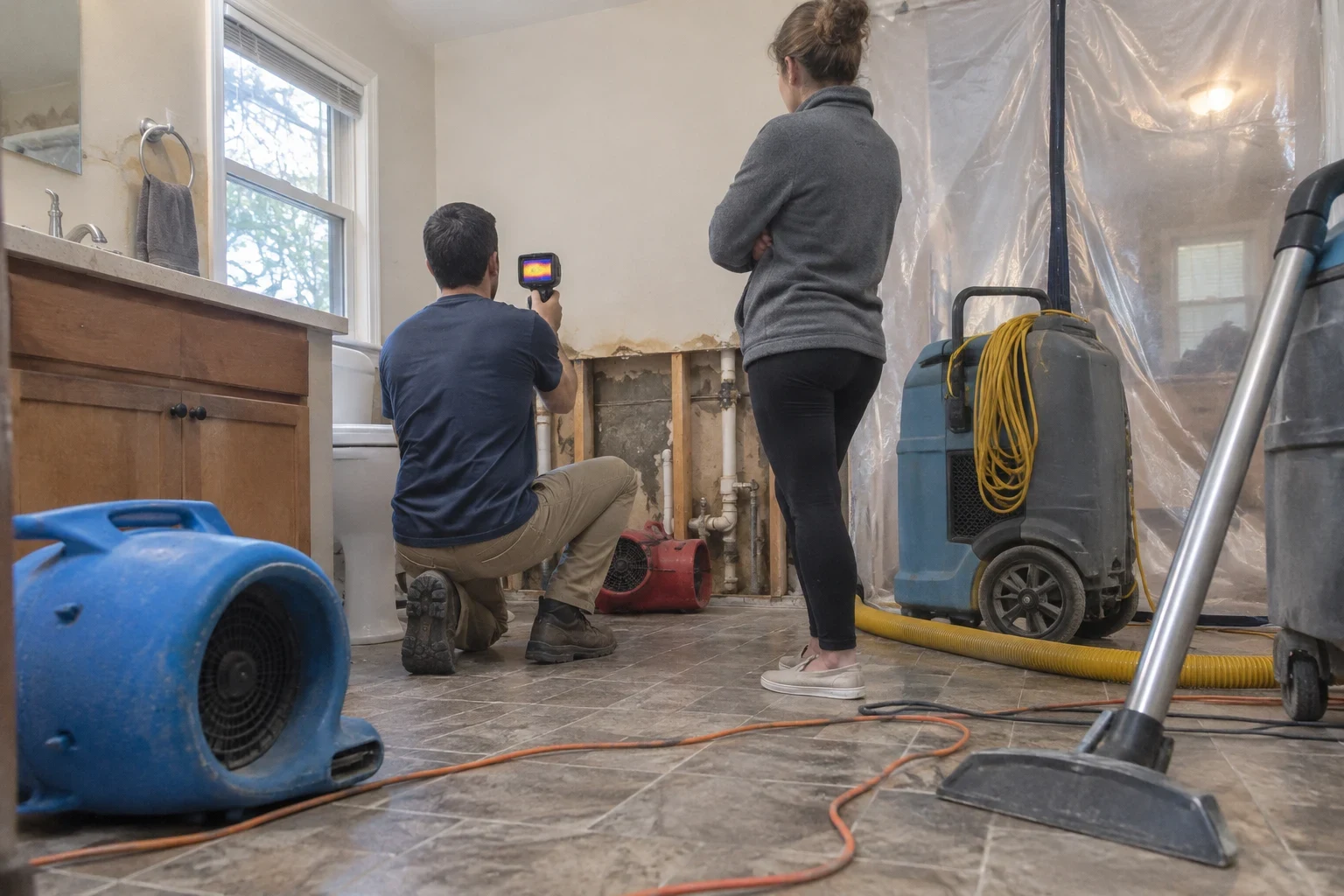
Holes cut to dry out the wall cavity have to be closed at some point. Left open, they let dust, bugs and mice get inside the wall.
The floor gives underfoot
A spot that flexes or sinks when you step on it usually points to a wet subfloor. Drying alone won't make it solid again.
Cabinet bases are swollen
Once particleboard gets wet, it puffs up and starts to crumble. Doors stop lining up, and the box can't properly support a sink or countertop anymore.
Paint is bubbling or stained
Brown rings or peeling paint after a leak tell you the drywall underneath took on water. A fresh coat over it only covers the problem for a short time.
Trim and doors have swelled
Split baseboards or doors that start to stick after water got in mean the wood absorbed moisture. These pieces cost little to replace and make a room look finished again.
How a rebuild job runs
- 1
Inspection and moisture check
We come out, take moisture readings and look at every damaged area. Nothing gets closed up until the readings say the structure is dry. We take photos of what we find.
- 2
Written scope and estimate
You get a line-item list of what we plan to repair, what we plan to replace and why. If you have an insurance claim, we can share that list with your adjuster. We work with most major insurance companies.
- 3
Protect the rest of the house
We cover floors along the work path and seal off the work area with plastic. Dust stays in the room we are working in.
- 4
Build it back
Framing and subfloor first, then insulation, drywall, flooring, cabinets and trim. Paint goes on last. We clean up each day before we leave.
- 5
Final walk-through
We walk the job with you and check every item on the scope. Anything that is not right gets fixed before we call it done.
What moves the cost of a rebuild
No two rebuilds cost the same, so we price each one after we see it. The biggest factors are how much material came out and what you choose to put back. You get the number in writing before work starts.
- How far the water traveled
- One wet bathroom wall is a small job. Water that ran under walls into three rooms means more drywall, more flooring and more trim.
- What is under the surface
- Rotted subfloor, wet framing or damage in the crawl space adds work. We find this during the inspection, not halfway through the job.
- Materials you pick
- Matching existing flooring, choosing new cabinets or upgrading finishes all change the price. We tell you where saving the old material is possible.
- Permits and inspections
- Work that needs a county permit adds fees and inspection time to the schedule.
Repairs and rebuild questions
Something not covered here? (804) 531-5797
Can you match my existing flooring?
A lot of the time we can, but not every time. Older hardwood and laminate lines that have been discontinued are tough to track down. We look for a match before work begins and tell you up front if we can't find one. In some cases, replacing the floor in the whole room gives a more even look than a patch.
How long does a rebuild take?
That comes down to how big the job is and whether it needs a permit or special-order materials. One room usually goes quickly. A kitchen with new cabinets runs longer because of how long cabinets take to arrive. Your written estimate comes with a schedule.
Can I hire someone else for the rebuild after you dry things out?
Yes, that choice is yours. Plenty of homeowners stay with us since we already know what came out and what sits behind the walls. That means nobody has to open things up a second time to find out.
Will my insurance pay for the rebuild?
It depends on what your policy says and where the water came from. That decision belongs to your adjuster, not to us. We hand over photos, moisture readings and a line-item scope so the adjuster has the details to review your claim.
Can I stay in my home during the work?
Usually, yes. The work area gets sealed off and the dust stays inside it. If your kitchen or your only bathroom is being torn out, we sit down with you and plan the work around how you live.
Let's get your rooms finished and lasting
We walk through the damage with you and tell you plainly what can stay and what has to go. For an active leak or fresh flooding, our crew is on site in 60 mins or less. We work with most major insurance companies.