ServicesWater Extraction
Water Extraction in Sandston, VA
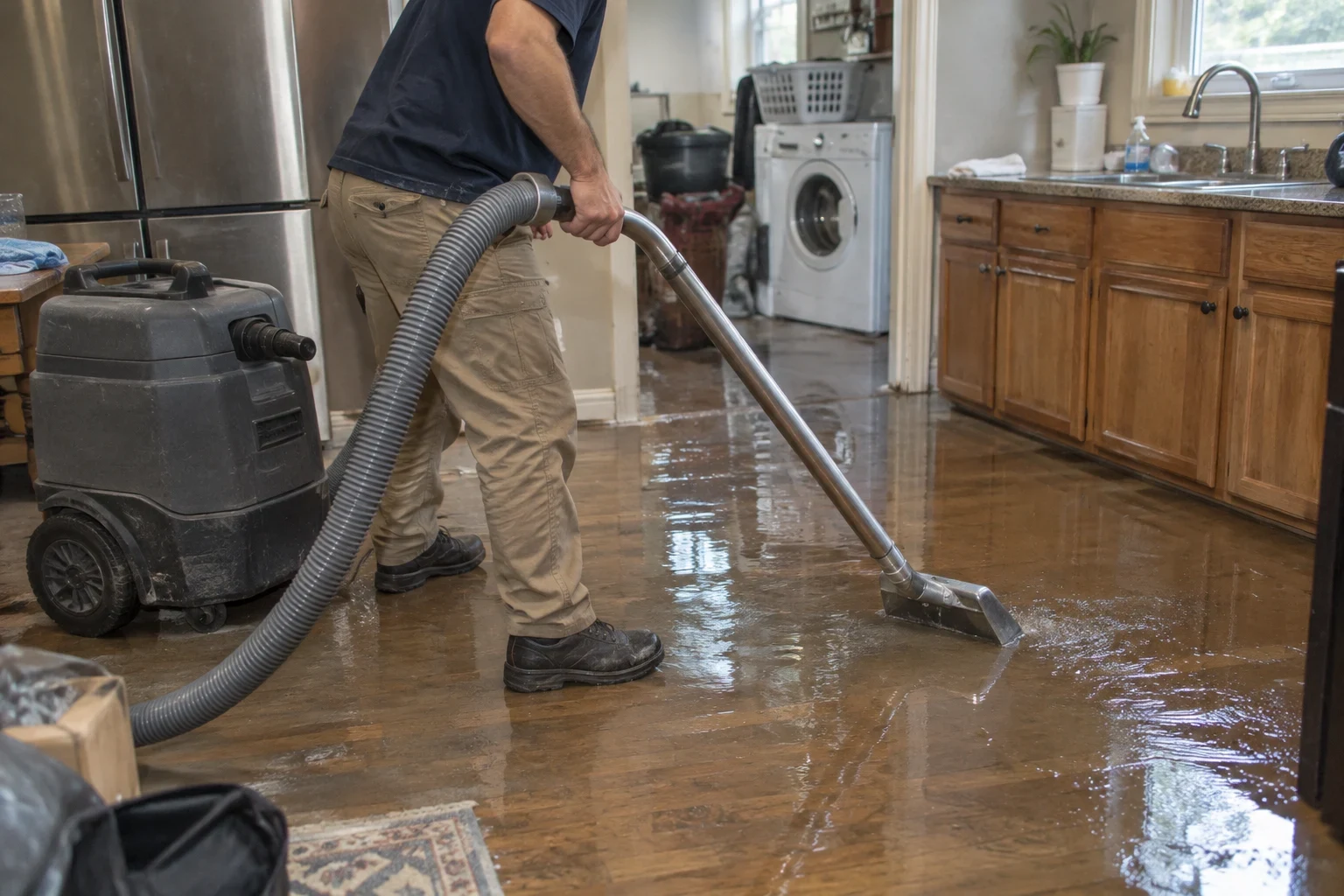
The first day after a leak decides how much of your home can be kept. Our crew arrives with extraction machines sized for the job, draws water from carpet, pad and hard floors, and checks for moisture hiding behind walls. Less water left behind means less to tear out later.
Get the water out before it soaks in
Water extraction comes first after a burst pipe, a water heater that gives out, a washer that overflows or a storm that sends water indoors. We clear the standing water and as much soaked-in water as our machines can reach. That includes carpet and pad, the seams in hardwood, tile grout, and the spots under cabinets and along baseboards.
Each gallon a machine removes is one the drying equipment won't have to evaporate. That shortens drying and stops water from climbing drywall or settling into the subfloor. Most of what's in your home can last for years if it's dealt with early. Hardwood left wet begins to cup. Particleboard puffs up and stays that way. Drywall that soaks for two days often has to be cut out.
We pick up the phone at any hour, and we're on site in 60 mins or less.
What our water extraction covers
- Removing standing water
- Our truck-mounted units and smaller portable machines clear water from floors, basements and crawlspaces. When it's too deep to vacuum, we drop in submersible pumps.
- Carpet and pad
- Weighted tools squeeze water out of the carpet and the pad beneath it. We'll give you a straight answer on the pad. Many times the better move is new pad under the same carpet.
- Hard floors
- We clear water from hardwood, laminate, vinyl plank and tile. Hardwood can get suction drying mats that lift moisture out from the gaps between boards.
- Finding hidden moisture
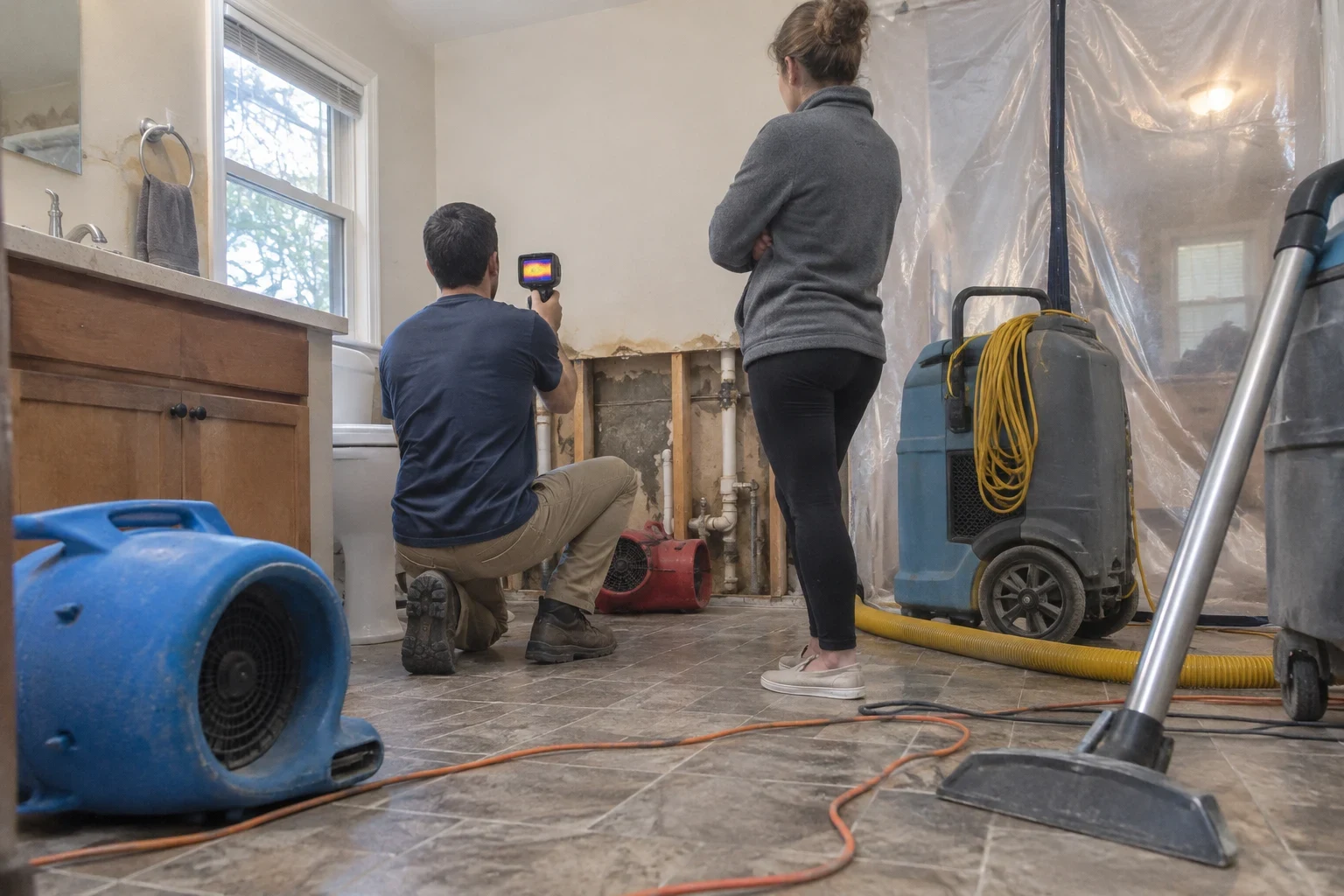
- We check walls and floors with moisture meters and an infrared camera to see how far the water moved. The wet edges get marked so no damp spot is left to rot out of sight.
- Moving and protecting contents
- Furniture gets set on blocks or foam so the legs don't bleed stains into the carpet. Things at risk come out of the wet room, and fragile items get set aside for extra care.
- Photos for your records
- Before work starts, we take pictures of the source, the water and the damage. Your insurance claim goes smoother with them. We work with most major insurance companies.
Signs you need water extraction
Water you can see
Standing water on any floor needs proper equipment, not a pile of towels. Every hour it sits, it sinks deeper.
Carpet that squishes
When carpet feels damp or squishes as you walk, the pad under it is holding much more water than you can see.
A wet basement or crawlspace
Water under the house pushes humidity into every room above. Given time, it rusts ductwork and weakens floor joists.
Dark lines on baseboards
Stains or swelling low on the wall mean the drywall is drawing water upward.
Boards curling at the edges
Wood or laminate that curls up at the seams is soaking up water underneath.
A damp, stale odor
If a room smells stale after a leak, something never dried out. Have it checked before mold takes hold.
What moves the cost of water extraction
Two leaks can sound alike over the phone and turn out to be very different jobs, so we don't put a number on it before we see it. The on-site inspection is free, and after it you get a written estimate broken out line by line. If you're filing a claim, we'll walk you through how the paperwork usually goes. Coverage is up to your adjuster, not us.
Volume of water and spread
A single wet bathroom doesn't take long. When water slipped under walls into several rooms, it needs more machines and more labor.
Where the water came from
A broken supply line is clean water and the simplest case. A washer drain or toilet overflow needs extra cleaning, and anything involving sewage is handled under our sewage cleanup work.
Floor types
Carpet over pad, glued-down vinyl and hardwood each call for different tools and a different amount of time.
Getting to the water
Finished basements, low crawlspaces and hoses that have to run up a flight of stairs all add hours.
How long it sat
Water left for a few days goes deeper and can start mold growth. Getting us out early is the best way to keep the bill down.
How a water extraction visit goes
- 1
Stop the source
If water is still running, we help you close the main valve or the shutoff at the fixture. We check for electrical risks before anyone steps into the wet area.
- 2
Inspect and map
There's no charge for the on-site inspection. We go through your home with meters, find where the wet area ends and take photos. Then we explain in plain words what we found and what we recommend.
- 3
Extract room by room
Machines and pumps go in, and we start where the water is deepest. Furniture is moved or raised as we work through each room.
- 4
Hand off to drying
With the liquid gone, we bring in fans and dehumidifiers to pull out what's left; our drying and dehumidifying page explains that part. We return for readings until the wood and drywall test dry.
- 5
Talk about what's next
If wet pad or the lower part of a wall needs to come out, you hear about it before we cut anything. Anything that has to be put back is handled by our repairs and rebuild work.
Water extraction questions
Is a shop vac enough?
On a small spill over tile, a shop vac can help. It won't reach the water trapped in carpet pad, the subfloor or the bottom few inches of drywall. That hidden water is what cups floors and starts mold a few weeks later, which is why we test for it with moisture meters.
How long does water extraction take?
A single room is usually finished in a few hours. A flooded basement or water across several rooms can take most of the day. Drying follows and tends to run a few days, and we come back to take readings along the way.
Can my carpet be kept?
Often it can, if the water was clean and we got to it early. The pad is usually swapped out because it holds water and is cheap to replace. If the source was a sewer backup or the carpet stayed wet too long, we'll tell you straight that it needs to go.
Will my homeowners insurance pay for extraction?
Sudden damage, like a pipe that bursts, is covered under many policies. Slow leaks and water coming in from outside often fall under separate rules. We work with most major insurance companies. You get our photos and a line-item estimate to send in, and your adjuster makes the call on coverage.
What's the difference between extraction and drying?
Extraction pulls out the liquid water. Drying and dehumidifying takes out the moisture left behind in wood, drywall and the air. Skip either one and water stays in your home.
Will you come out after hours?
Yes. We take emergency calls 24/7, including nights, weekends and holidays. A leak at 2 a.m. gets the same response as one at noon.
Water on the floor? Let's get it out
Shut off the water if you can, keep clear of wet outlets, and give us a call. We'll come take a look, explain what we see and start pulling water so your floors and walls have the best chance to last.