ServicesMold Remediation
Mold Remediation in Sandston, VA
We find the mold and the water feeding it, then take out what can't be saved. We clean and dry what can stay, so your framing, subfloor and drywall keep doing their job for years. The first step is a free on-site inspection.
Mold is a water problem first
Mold needs moisture to grow. Wet drywall, damp carpet pad or a sweating crawl space can start growing it in a day or two. Wiping spots off the surface does not fix it. If water is still getting in, the mold comes back.
Our job is to remove the growth, clean the materials worth keeping and stop the moisture behind it. That last part is what makes the work last. A house that stays dry keeps its wood, drywall and insulation in good shape a lot longer.
Central Virginia summers are humid, and that keeps basements and crawl spaces damp unless air and drainage are handled. We point out what we see and tell you which fixes matter now and which can wait.
What the work includes
- Finding the moisture source
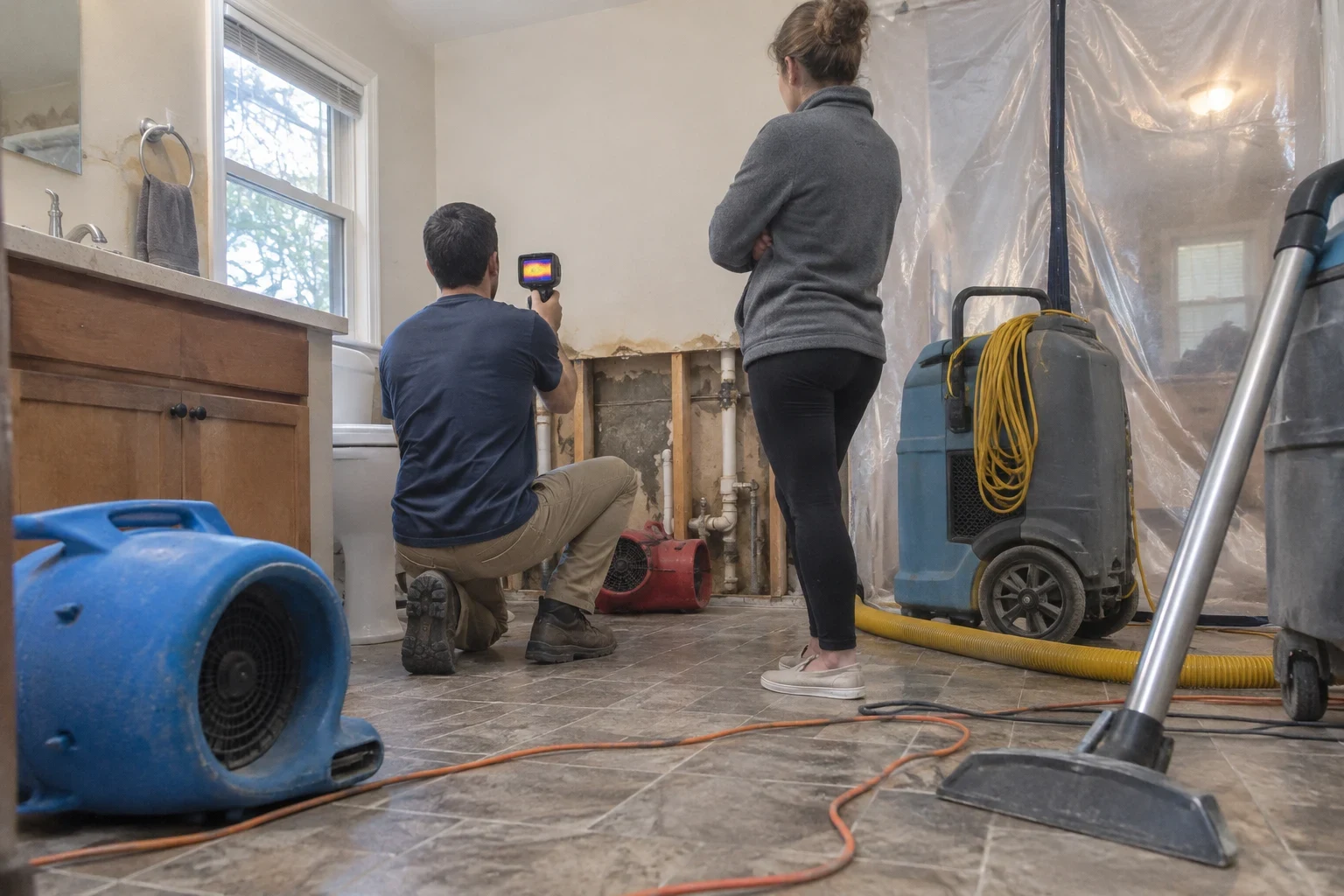
- We use moisture meters and check plumbing, the roof line, windows and the crawl space. If we can't find where the water comes from, the mold will be back, so we start here.
- Containment and air filtration
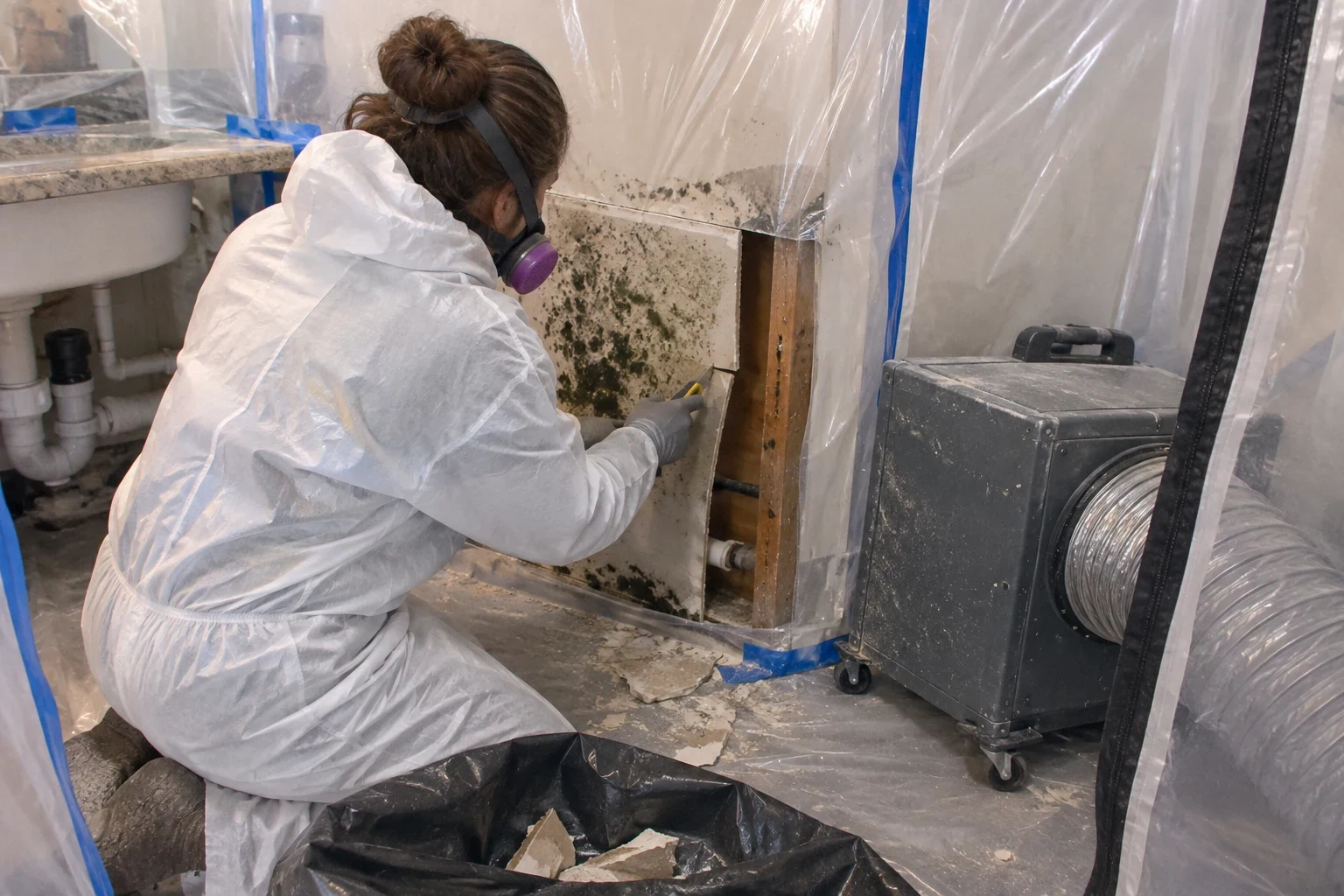
- We close off the room with plastic walls and tape so the work stays in one spot. HEPA air scrubbers run the whole time, pulling spores out of the air before they can settle elsewhere in your home.
- Removing damaged materials
- Porous materials with growth in them, like drywall, carpet pad and insulation, usually have to go. We cut out only what is affected and bag it before it leaves the room.
- Cleaning what stays
- Studs, joists and subfloor are often sound under the stains. We HEPA vacuum them, clean them and treat the surfaces so the structure can stay in place.
- Drying and moisture checks
- We dry the area with dehumidifiers and air movers and take readings until the wood and walls are back to normal. Larger wet areas are handled through our drying and dehumidifying service.
- Photos and notes
- You get photos of what we found and what we removed. That record helps with an insurance claim and with any repairs and rebuild work later.
Signs you may need mold remediation
A musty smell that won't clear
If a room or closet smells earthy even after cleaning, something is likely growing out of sight. Often it is behind drywall or under flooring.
Spots that come back
Black, green or white patches that return after you scrub them mean the growth is in the material, not just on top.
Old water damage
A leak, overflow or wet basement that was never fully dried is a common start. Ceiling stains and bubbling paint are clues.
Damp crawl space or basement
Sweating pipes, wet insulation hanging down or a fuzzy coating on joists all point to moisture that needs attention.
Warped or soft materials
Baseboards pulling away, swollen trim or a floor that feels soft underfoot can mean long-term moisture with growth underneath.
How a mold job runs
- 1
Free inspection
We come out, look, take moisture readings and show you what we find. You get a straight answer on how big the problem is and whether you need us at all.
- 2
Written estimate
We put the scope in writing, line by line. If insurance may cover it, we explain how the claim usually goes. We work with most major insurance companies.
- 3
Contain and remove
On work day we protect floors and walkways, set up containment and air filtration, then remove damaged materials. Small areas often take a day or two.
- 4
Clean, dry and confirm
We clean the remaining surfaces, dry the area and check moisture again before containment comes down. Then we clean up and haul everything off.
- 5
Keep it from coming back
Before we leave, we go over what caused it and the upkeep that prevents a repeat: a fixed leak, better venting, a dehumidifier, downspouts that drain away from the house. Small habits like these save you from doing this twice.
What affects the cost
Every mold job is priced after we see it. Size matters, but so does what is hiding behind the visible spots. You get a written estimate before any work starts, and we tell you if the scope changes.
- How much area is affected
- A patch on one wall is a small job. Growth spread across a basement or crawl space takes more containment, more removal and more time.
- The material under the growth
- Solid wood like studs and joists usually cleans up and stays. Soft, porous stuff such as drywall, carpet and insulation tends to hold mold deep inside, so it gets cut out and replaced. More replacement means a bigger bill.
- Access
- Tight crawl spaces, attics and finished ceilings take longer to work in safely. Easy-to-reach areas cost less.
- The moisture source
- If a leak or drainage problem is still feeding the mold, it has to be dealt with or the work won't last. That can add to the job, but it protects what you spend.
- Putting things back
- Replacing drywall, trim or flooring after removal is separate from the cleanup. Our repairs and rebuild service handles that part.
Mold remediation questions
Something not covered here? (804) 531-5797
Can I just clean the mold with bleach?
Small spots on tile or other hard, sealed surfaces can often be wiped clean. On drywall or wood, bleach mostly fades the stain while the growth stays rooted in the material. It also does nothing about the water that started it. If the growth covers more than a small patch, or it shows up again after you scrub it, have someone come out and check it.
Will my homeowners insurance pay for mold?
That comes down to your policy and what caused the growth. Coverage is more likely when the mold traces back to a sudden event such as a burst supply line. It is less likely when it built up over months from a drip nobody caught or damp air that never cleared. Your adjuster decides what is covered, and we show you what to photograph and write down. We work with most major insurance companies.
Do I have to leave my home during the work?
Usually not. Containment and air filtration keep the work area sealed off from the rest of the house. If someone at home has asthma or a weak immune system, we will talk through whether staying elsewhere for a day or two makes sense.
How fast can you get here if there's still water?
Mold often follows a leak or flood that is still wet. For active water we offer emergency response, and we are on site in 60 mins or less. Getting the water out early is the best way to keep mold from starting.
How do I keep mold from coming back?
Keep things dry. Fix leaks fast, run bathroom fans, keep indoor humidity down in the muggy months and make sure downspouts carry water away from the foundation. A dehumidifier in a basement or crawl space does a lot of the work for you.
Smell something musty? Let us take a look
We will come out, find the moisture and tell you plainly what needs to go and what can stay. If water is still coming in, we can respond right away.