How Long Does It Take a Flooded House in Sandston to Dry Out?
The calendar matters less than the moisture readings, but here is what a realistic drying schedule looks like and why.
How long does it take for a flooded house to dry out?
With the standing water pulled out fast and professional drying equipment running, most flooded homes dry in about three to five days. Some take longer. Hardwood, plaster, crawl spaces and water that sat for days can stretch it to a week or two. Fans and open windows alone can take weeks and invite mold.
What decides how long drying takes
Every flood is different, so we never give a drying time until we have looked and taken readings. A few things set the schedule more than anything else.
The first is how much water soaked in before anyone started removing it. Water on top of a floor is easy. Water that wicked up drywall and into the bottom plate of a wall is slow.
- How long the water sat before extraction started
- What got wet: carpet and drywall dry faster than hardwood, plaster or subfloor
- Whether water reached a crawl space or got under a slab floor
- How humid it is outside and inside the house
- Whether wet carpet pad and insulation come out or stay in
- How much drying equipment is running and where it is placed
Why fans and open windows usually are not enough
Box fans move air across the surface. They do little for water trapped inside a wall cavity or under flooring. Opening windows only helps if the air outside is drier than the air inside.
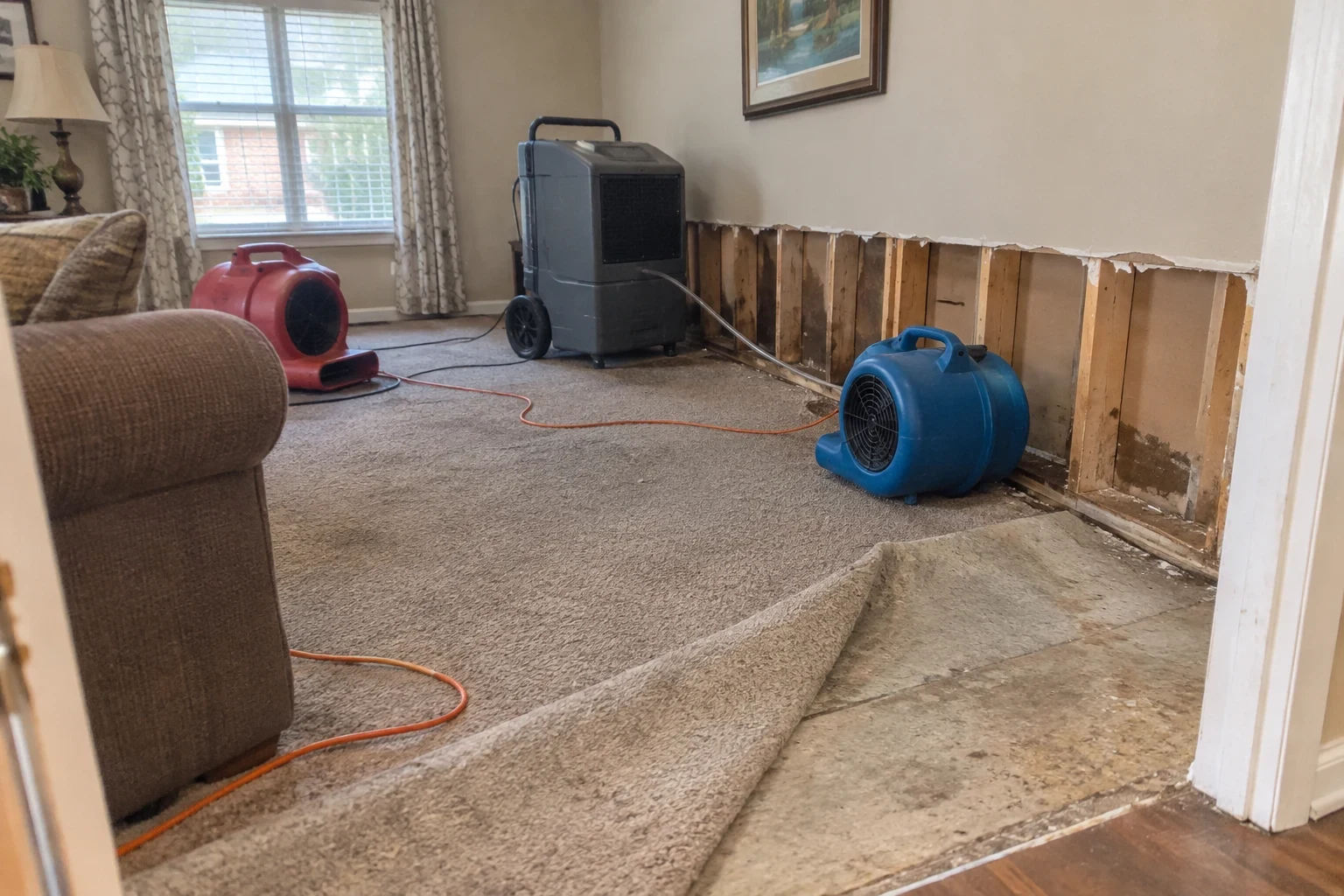
Around Sandston, summer air is often heavy and damp, so open windows can actually push more moisture into your home. That is why we close the house up and run dehumidifiers that pull water out of the air and send it down a drain line. Paired with air movers aimed low along walls and floors, that setup dries in days what a fan might take weeks to finish.
What a drying job looks like day by day
Day one is about getting water out. We do water extraction with extraction equipment, pull wet carpet pad, and take moisture readings in floors, walls and trim. If drywall is soaked high or the water was dirty, we cut it back so the wall cavity can breathe.
Then the drying and dehumidifying equipment goes in. We check readings every day and move or adjust machines based on what the meter says. Most of the progress shows up in the first couple of days. The last stretch is slower, because the deepest moisture in framing and subfloor comes out last.
When the readings say the job is done, we pull the equipment and you get a record of what was measured. From there you can move on to repairs and rebuild without guessing.
- Day 1: extraction, removal of soaked materials, first readings, equipment set
- Days 2 to 4: daily checks, machines moved to the wettest areas
- Final day: readings match dry areas of the house, equipment comes out
How we know your home is actually dry
Dry to the touch is not dry. Drywall can feel fine while the stud behind it is still holding water. We use moisture meters and compare wet areas to a part of the same house the water never reached.
When the flooded materials read the same as those dry areas, the job is finished. Not before. That is the only honest finish line, and it is the step that keeps hidden moisture from turning into a problem a few months later.
What happens if drying is rushed
We look at drying as protecting what you already have. Framing, subfloor and cabinets that are dried properly can stay in place and last for years. Close them up wet and they start to break down.
Trapped moisture can lead to mold growth in a wall cavity, cupped or buckled hardwood, swollen cabinet bases, peeling paint and a musty smell that keeps coming back. In older homes with crawl spaces, damp joists and sill plates can soften over time. If mold has already started, mold remediation has to happen before anything gets sealed back up.
Taking an extra day or two to finish drying almost always costs less than tearing out flooring or walls later.
More questions about drying out a flooded house
- Can we stay in the house while it dries?
- Often, yes, if the water was clean and the living areas are usable. The machines are loud and warm, so some families stay elsewhere for a few nights. If the flood involved sewage, we will tell you plainly whether it is safe to stay.
- Do you always have to cut out drywall?
- No. Drywall that got a little wet from clean water can often be dried in place. If it is soaked high up the wall, falling apart, or hit by dirty flood water, it needs to come out.
- Will my insurance pay for the drying?
- That depends on your policy and what caused the water. We work with most major insurance companies, and we document readings and photos so your adjuster can see what was done.
- How long should I wait before calling?
- Do not wait. Mold can start growing within a day or two, and every hour water sits it soaks deeper into floors and walls.
Water in your home right now?
We offer emergency water damage response and are on site in 60 mins or less. We will pull the water out, set up drying, and give you a free on-site inspection with straight answers about what can be saved.